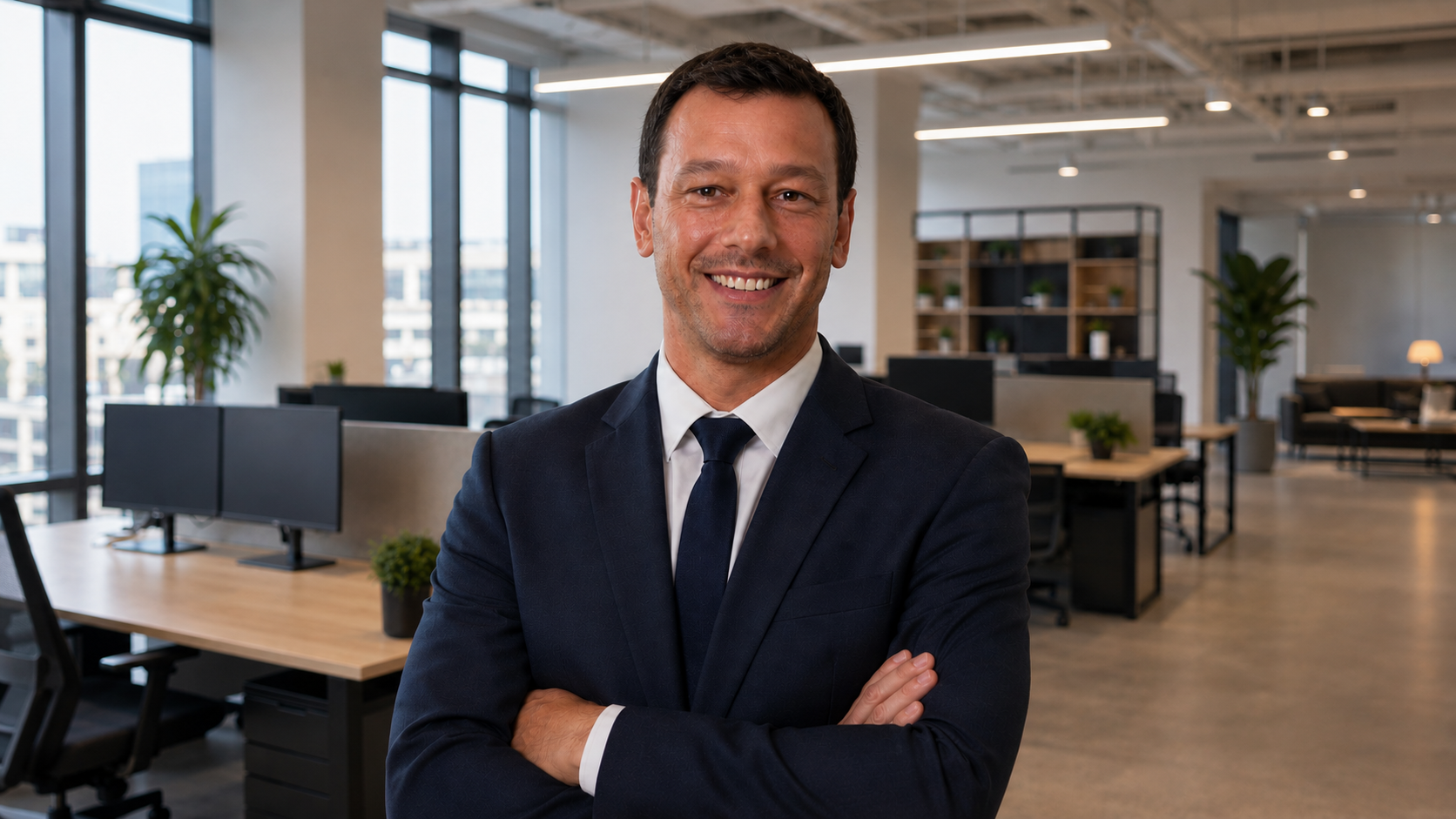
Between back-end and softair: Raul’s story
Eight years at Mashfrog, complex projects, cloud adoption, DevOps, and a strong passion for technology. Raul Castri shares his story, balancing work, free time, and future perspectives.

Raul Castri, Solution Architect in the Digital Experience Practice at Mashfrog Group, has been with the company for nearly eight years. Over the course of his journey, he has worked on complex, high-impact projects, contributing to the technological evolution of the back-end area and the development of cloud-native solutions, while never losing sight of the value of teamwork and people.
How long have you been working at Mashfrog, and what do you do?
I’ve been working at Mashfrog for almost eight years, and I currently hold the role of Solution Architect within the Digital Experience Practice. I mainly focus on back-end development and, together with my manager, coordinate the team’s activities, overseeing both software development and aspects related to infrastructure and deployment processes.
Over time, my role has expanded to also include managing DevOps activities: from system integration to facilitating releases across different environments, both on-premises and in the cloud. We work on platforms such as AWS, Azure, and Google Cloud, with the goal of making processes increasingly automated, reliable, and efficient.
Looking back, I’m proud of the journey I’ve taken at Mashfrog: I joined as a developer and, thanks to ongoing collaboration and the trust I was given, I’ve had the opportunity to take on increasingly greater responsibilities.
What were you doing before you joined Mashfrog?
My educational background began at a classical high school, a choice that might seem far removed from the world of technology, and continued with a degree in Computer Engineering. It was a challenging transition, especially at the beginning, because I moved from Greek and Latin to dealing with numbers, logic, and programming, but it was a challenge that gave me a lot in terms of method and discipline.
Before joining Mashfrog, I had several work experiences, but the one I remember as the most significant was connected to a hackathon organized by Bridgestone: a project that lasted about six months and was very similar to a real-world work experience.
Together with a team of four university students, we developed a mobile application and the entire back-end infrastructure to collect data useful to the company. At the end of the program, Bridgestone awarded the most innovative solutions, and our team ranked first out of ten groups from the main public universities in Rome.
In addition to the recognition, we also received a cash prize—an important achievement that made the experience even more rewarding and confirmed my desire to work in the world of software development. Shortly after that, I joined Mashfrog as a developer.
Which projects have you been most passionate about at Mashfrog?
Over the years, I’ve worked on many projects, and generally each one follows a similar life cycle: there’s always a complex initial phase, when tension is high and everything seems difficult. Then, as the work takes shape, you start to recognize the value of what you’re building—especially when the result is the product of teamwork.
One of the projects I’m most attached to is Favero Electronics. It was the first one I followed end to end, from the analysis phase through to the production release. Seeing it take shape and grow was very meaningful, especially because today it supports high traffic volumes, with significant peaks during periods like Black Friday.
Another key aspect of my journey has been working on cloud-native projects, which helped kick off an increasingly structured cloud adoption path within Mashfrog. From there came the need to better organize DevOps activities as well, with a focus on release automation and operational system management.
Among the more recent projects is Plures Alia, which I personally handled for the entire back-end after the analysis phase, and Prysmian—both examples of complex initiatives that require coordination, technical vision, and continuous collaboration.
What do you do when you’re not working?
Technology remains a passion even outside of work. I enjoy staying up to date on emerging software and the most widely used frameworks, and experimenting with new programming languages—often out of simple curiosity. It’s a kind of professional habit, but in my role it’s also a way to stay sharp and always have an up-to-date view of what’s happening in the IT world.
Beyond that, I have many passions that take me away from my desk. One of the main ones is airsoft, a tactical military simulation game played outdoors. It’s not a digital activity or classic paintball—it’s a physical experience, immersed in nature, and it can last up to 48 or even 72 consecutive hours.
It’s played as a team, and each participant has a specific role: some handle radio communications, others manage GPS navigation, some lead the group, and others act as scouts. It’s an activity that requires strategy, physical endurance, and a strong sense of collaboration. Being in contact with nature is a fundamental part of this passion—you walk a lot, sleep in the woods, and learn how to move in unconventional environments. At the end of the events, there’s always a social moment as well, the so-called "third half," where food and local traditions are shared.
Alongside airsoft, there’s also motorcycling, which represents another form of freedom for me, and hiking, which I also practice independently, exploring trails and nature routes around Italy. Finally, a special place is held by my dog, who has become my greatest love… right after my wife, whom I married in July.
What are your prospects for the future?
At Mashfrog, I’d like to continue my journey by gradually expanding my scope of responsibilities. I’ve always really appreciated the fact that the company knows how to recognize and value people’s commitment—it’s something that truly makes a difference in everyday working life.
On a personal level, I’m entering the beginning of a new phase. Getting married marked an important starting point and laid the foundation for building a family—a life project I care deeply about and look forward to with enthusiasm.