
Digital Twin: when the real meets AI
Digital twins and Artificial Intelligence are transforming cities, mobility, real estate, retail, and events: digital replicas that analyze real-world data to optimize efficiency, sustainability, and people’s overall experience.
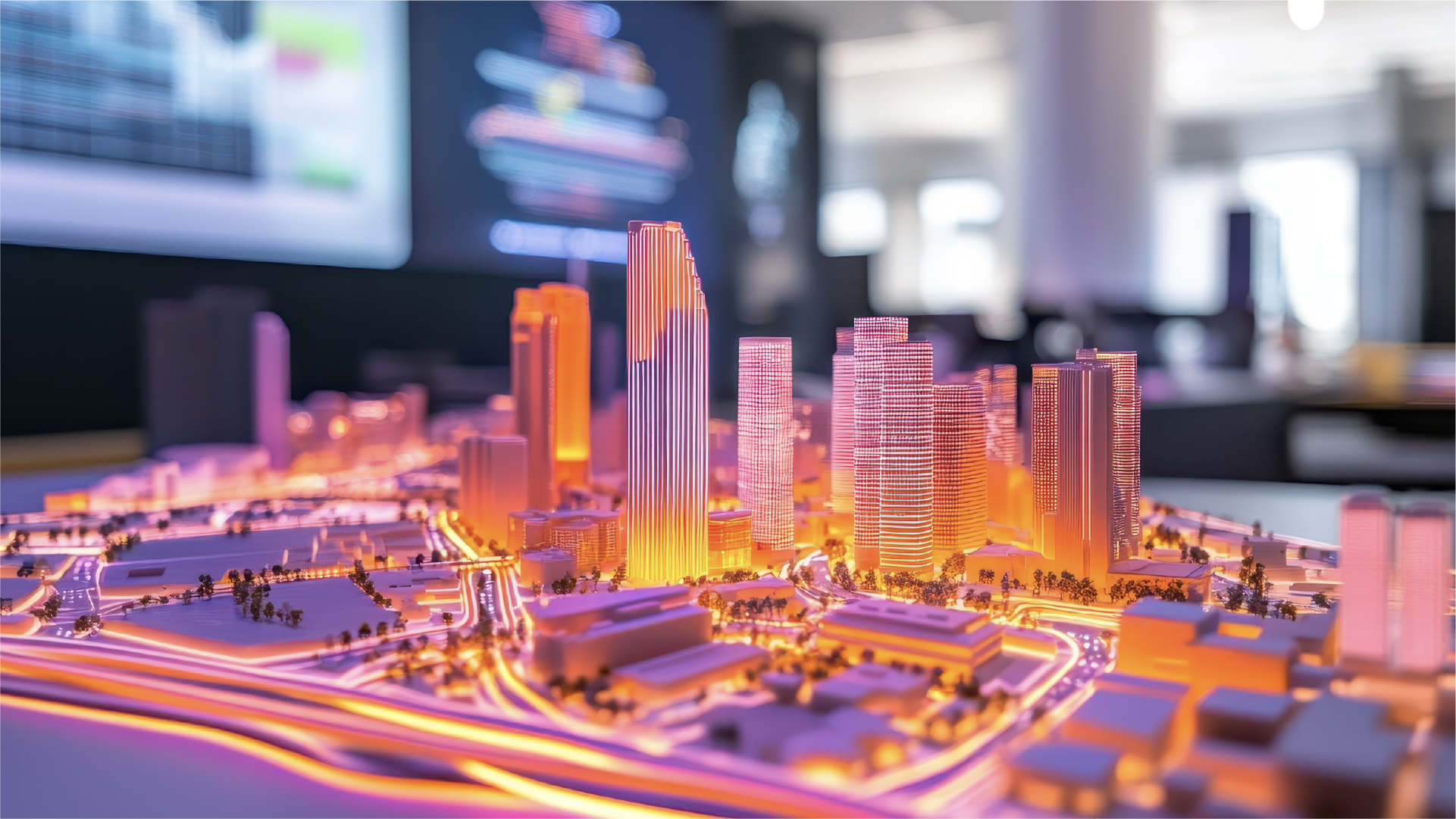
The real world and the digital one have never been this close. Artificial Intelligence (AI) and digital twin technologies are transforming the way companies, cities, and people design, manage, and experience spaces.
A digital twin is an intelligent digital replica of a physical system—such as a city, a building, a transportation network, a store, or an event. This virtual copy, powered by IoT sensors and AI algorithms, collects and analyzes real-time data, simulates behaviors, and predicts future scenarios.
The integration of AI, machine learning, and 3D modeling has transformed digital twins from simple visualization tools into true decision-making ecosystems. According to Gartner, by 2030 more than 70% of global companies will adopt at least one digital twin solution. The fields of application are expanding every day: smart cities, real estate, mobility, retail, events, and ticketing.
Digital Twins for Cities: planning the urban future
Smart cities are the most fertile ground for the use of digital twins. In Copenhagen, the digital replica of the Danish capital integrates data on traffic, infrastructure, emissions, and energy consumption. Powered by Artificial Intelligence, the system simulates the impact of new urban policies or changes to mobility, enabling administrators to optimize environmental and operational decisions.
Dubai, with its ambitious Dubai Digital Twin project, has connected more than one hundred public and private data sources into a single digital ecosystem. The platform makes it possible to monitor the city in real time, analyze the flow of people and vehicles, and improve citizen services. Predictive AI processes millions of data points every second, turning the digital twin into a true "urban consciousness."
These urban models make it possible to test sustainable development scenarios, reduce consumption, and optimize infrastructure. In this context, the digital twin becomes a compass guiding the ecological and technological transition of cities.
Real Estate: smart buildings and smarter investments
In the real estate sector, the concept of the digital twin is redefining how buildings are designed, managed, and marketed. Platforms like Matterport and integrated solutions from Siemens and Schneider Electric make it possible to create interactive digital replicas of properties. These systems combine BIM models with sensor data (lighting, HVAC, occupancy, air quality) to monitor comfort, energy consumption, maintenance needs, and safety in real time.
An example of a "made-in-Mashfrog" digital twin is Builg: a platform built on Salesforce CRM, designed to offer an integrated ecosystem for the real estate world—from property developers and construction companies to agents, owners, and buyers.
Builg seamlessly connects property management, customer relationships, and workflows related to renovations or services, providing real-time updates, collaborative communication tools, and AI-powered models (Agent AI) to unlock new business opportunities.
In other words, the platform turns the digital twin into an operational and relational tool—not just a technical dataset or simulation—spanning the entire real estate value chain. It enables property customization, manages broker commissions, coordinates suppliers, and supports the full customer lifecycle.
For the real estate sector, this means increased operational efficiency, improved sustainability, enhanced asset value, and a more transparent, future-oriented experience.
In other words, the platform makes the digital twin fully operational—not just as a technical dataset or a simulation, but as an operational and relationship-centric platform that spans the entire real estate value chain. It enables property customization, manages broker commissions, coordinates suppliers, and supports the full customer lifecycle.
For the real estate sector, this means greater operational efficiency, improved sustainability, enhanced asset value, and a more transparent, future-oriented experience.
Mobility and infrastructure: predictive maintenance and sustainability
In the mobility sector, digital twins are transforming how infrastructures and traffic flows are managed. The German city of Aachen has developed an urban digital twin to analyze traffic, underground utilities, and road networks using IoT sensors and AI-powered predictive analytics models.
The platform can simulate infrastructure wear, flag critical issues, and plan maintenance operations well in advance. This reduces operational costs and improves safety.
In the rail and energy sectors as well, companies like Hitachi Rail are adopting digital twin solutions to manage complex assets in real time. With the support of AI, these systems learn from data and anticipate failures or inefficiencies. This marks the transformation of traditional O&M (Operation & Maintenance) into predictive, intelligent management.
Events and ticketing: a twin for the sport experience
In the events world, digital twins are reshaping the relationship between audiences and venues. The Venue Twin platform makes it possible to create digital replicas of stadiums, theaters, and arenas: visitor flows, seat visibility, access points, and service areas can all be simulated before the event. AI supports bottleneck mitigation, safety plan definition, and path optimization, enhancing both the fan experience and overall revenue.
A concrete example within Mashfrog’s offering is the TicketWallet app, developed in partnership with Vivaticket: a fully digital solution that allows users to manage tickets and season passes directly from their smartphones.
Among its key features are: an integrated wallet for tickets and fan credentials, stadium access via QR code, seat or user changes, offline functionality, and post-purchase engagement tools. Thanks to system-wide integration, TicketWallet turns the ticketing process into an interactive, fully connected experience, where the event’s digital twin supports the audience’s entire journey—from discovery to entry, all the way through post-event services.
This synergy between digital twins, apps, and AI enables organizers not only to sell tickets, but to build a deeper ecosystem of data and interaction: the audience becomes an active part of the simulation, the event is designed and experienced in a hybrid mode, and the overall experience becomes more seamless, personalized, and connected.
Retail and marketing: a new phygital shopping experience
In retail, digital twins combine AI and behavioral data to create tailor-made experiences. Brands like Nike and Decathlon use digital replicas of their stores to analyze customer flows, test layouts, and improve commercial performance.
At the same time, the concept of the Digital Twin of the Customer is transforming marketing: each customer has a "digital twin" powered by real data — purchases, preferences, interactions — on which AI runs simulations to predict needs and optimize campaigns.
This new frontier of predictive marketing makes it possible to move from statistical segmentation to dynamic individualization. The digital twin thus becomes a bridge between marketing, data, and real behavior, making every interaction more relevant and personalized.
The digital twin as an intelligent ecosystem
The digital twin, enhanced by Artificial Intelligence, is no longer a futuristic vision but an operational reality. Whether it’s planning sustainable cities, managing smart buildings, or improving the consumer experience, digital twins are transforming the relationship between people, data, and space.
For companies, institutions, and brands, it means being able to observe, simulate, and anticipate reality. For communication, it represents an extraordinary metaphor for innovation: a world that learns on its own, where the digital becomes a tool for knowledge and progress.